 A A |
|
 C C |
|
LAMNIFORM FAMILY INCERTAE SEDIS (II) |
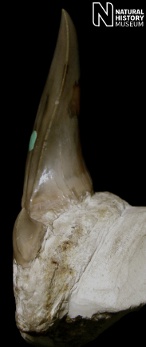
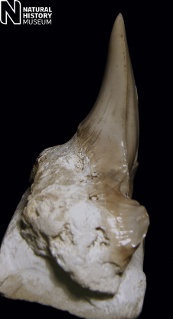
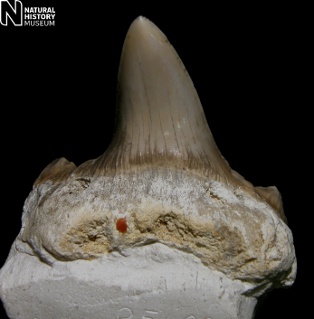
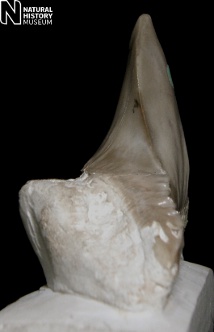
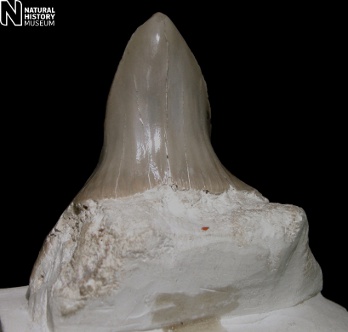
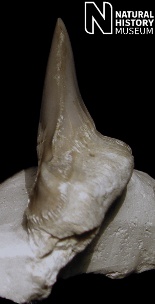
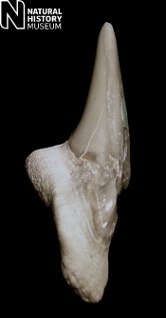
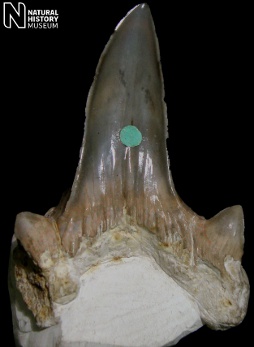
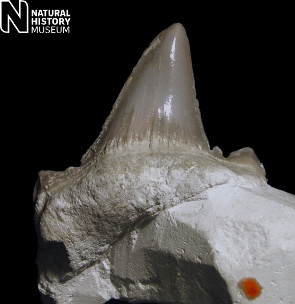
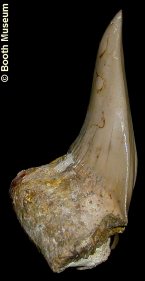
The large, robust, impressive teeth of the extinct genus Cretodus are encountered with low frequency in the British Chalk, though some associations of teeth are known (see figures below). Teeth are characterised by a tall, thick crown with fine to deep wrinkles at the base, and a highly convex lingual surface with a pronounced lingual protrusion. The root is low and thick, with highly divergent, pointed root halves. Accessory cusps are variably developed and this may have taxonomic significance.
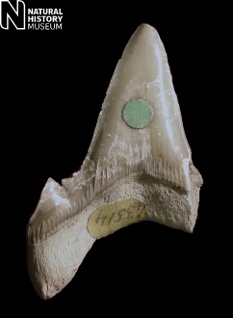
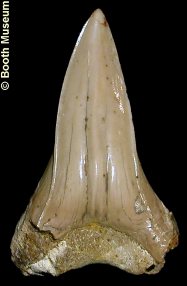
The smallest forms with minor accessory cusps are referred to Cretodus semiplicata, whilst the largest specimens with well developed accessory cusps are classified as C. sulcata. The very large teeth with accessory cusps poorly developed to absent are referred to C. crassidens. The validity of these species concepts is debated (note that apparently associated teeth figure below possess both C. crassidens- and C. sulcata-like forms).
Cretodus is perhaps close to Protolamna (and therefore the eoptolamnids?), though has also been placed amongst the cretoxyrhinids.
|
A |
|
C |
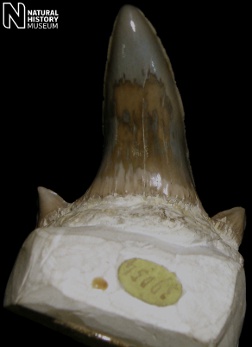
1). Cretodus sulcata - (A) Labial, (B) side and (C) lingual views of a large isolated tooth (note pronounced development of accessory cusps relative to Cretodus crassidens (x1.8, Surrey, NHMUK (British Museum (Natural History) London) PV P39054). Images © 2012 The Natural History Museum, by kind permission.
 A A |
 B B |
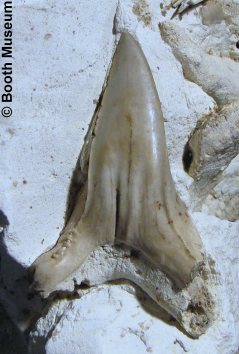
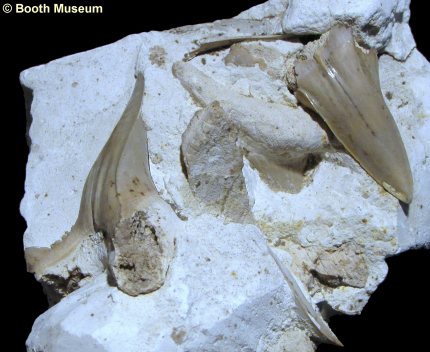
2). Cretodus crassidens - an association of very large, well preserved teeth (Turonian, Willett Collection, Booth Museum, BMB 007312, by kind permission of John Cooper): (A) Labial view of an anterior tooth - note the deep grooves in the front of the main cusp, and the attenuated/constricted lateral extensions of the main cusp which almost form accessory cusps (x1.8); (B) Part of the association, including a side view of the tooth in (A) - note the extremely convex nature of the lingual surface (x1.6).
 A A |
|
|
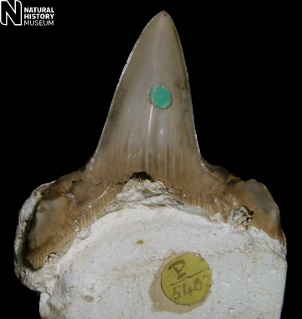
3). Cretodus sulcata - (A) Labial, (B) side and (C) lingual views of a large isolated tooth (x2.0, Lewes, NHMUK (British Museum (Natural History) London) PV P5402). Images © 2012 The Natural History Museum, by kind permission.
 A A |
 B B |
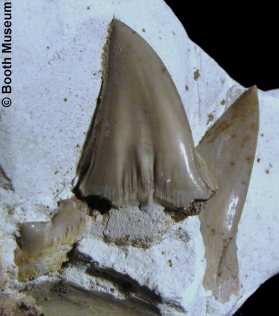
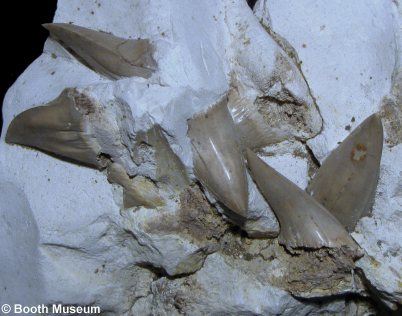
4). Cretodus crassidens (though approaching C. sulcata-type morphology) - an association of very large, well preserved teeth (Turonian, Willett Collection, Booth Museum, BMB 007312, by kind permission of John Cooper): (A) Labial view of a semi-lateral tooth - note the deep grooves in the front of the main cusp and the fine ridges and grooves at the base (x2.5); (B) Part of the association (x1.4).
 A A |
|
|
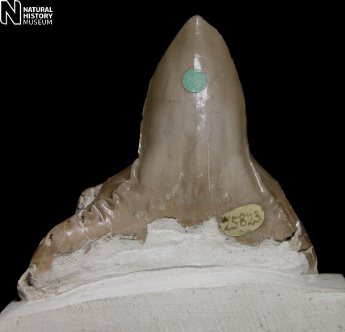
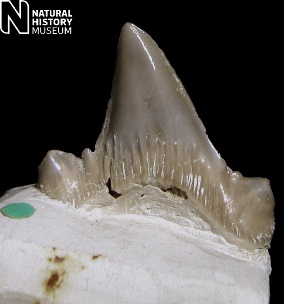
5). Cretodus crassidens - (A) Labial, (B) side and (C) lingual views of a large isolated tooth (note near absence of accessory cusps relative to Cretodus sulcata (x1.8, Hoghton, Sussex [Dixon Collection], NHMUK (British Museum (Natural History) London) PV P25823). Images © 2012 The Natural History Museum, by kind permission.
 A A |
|
 C C |
6). Cretodus semiplicata - (A) Labial, (B) side and (C) lingual views of an isolated tooth (note differences relative to Cretodus sulcata - smaller, broader main cusp, and presence of fine wrinkles at the base of the labial face of the main cusp but no grooves extending up the main cusp) (x3.1, Charing, Kent, NHMUK (British Museum (Natural History) London) PV P327). Images © 2012 The Natural History Museum, by kind permission.
 A A |
|
7). Cretodus semiplicata - (A) Labial and (B) side views of an isolated tooth (x2.6, near Rochester, Kent, NHMUK (British Museum (Natural History) London) PV P43514). Images © 2012 The Natural History Museum, by kind permission.
 A A |
 B B |
 C C |
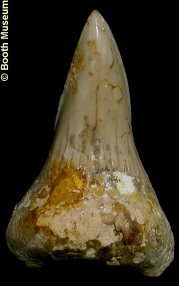
8). Cretodus crassidens: (A) Labial, (B) side and (C) lingual views of large tooth from an association of teeth (x1.6, Turonian, Willett Collection, Booth Museum, BMB 007312, by kind permission of John Cooper).
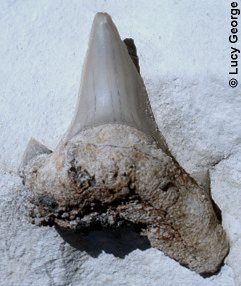
9). Cretodus sp.? - Lingual view of a large isolated tooth (x2.3, Grey Chalk, Samphire Hoe, near Dover Kent, Lucy George Collection). Image © 2009 Lucy George, by kind permission.